
Learning hub
Fence terminology (NZ)
A glossary of common fencing terms used in New Zealand, in plain English.
- RS
- Rough Sawn timber. Timber that has been sawn but not planed smooth. Has a rougher texture compared to dressed timber.
- DT (Dressed Timber)
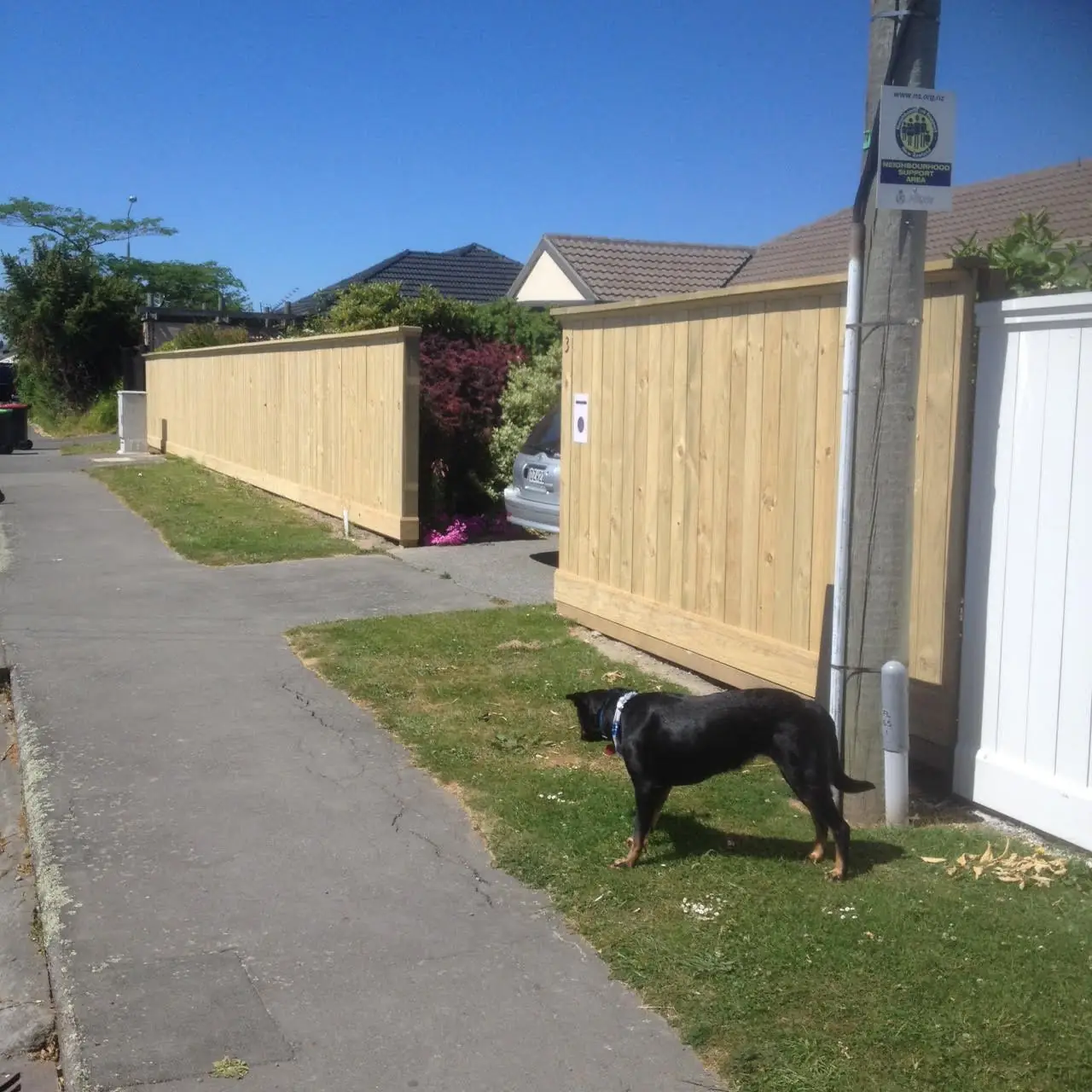
- Timber that has been planed smooth on all sides. Commonly used for street-front fences where a neat, finished appearance is desired.
- KB (Kickboard)
- A horizontal board at the bottom of a fence, typically 150mm or 200mm high. Provides ground clearance for palings and adds visual weight to the fence base.
- Capping Rail
- A horizontal timber piece that sits on top of the fence, covering the tops of palings and rails. Protects the fence from weather and gives a finished look.
- Scotia
- A decorative trim piece, often used where the capping rail meets the fence palings. Adds a finished detail to the fence top.
- Staggered Joins
- Rails joined at different posts rather than all at the same post. This avoids creating a weak point in the fence structure.
- Skewed
- Rails or palings that are cut at an angle to follow sloping ground, rather than being level.
- H4
- Timber treatment level suitable for ground contact. Used for fence posts that are set in the ground or concrete.
- H3
- Timber treatment level suitable for above-ground use. Used for palings, rails, and other fence components not in ground contact.
- SHS
- Square Hollow Section. Steel posts used as an alternative to timber posts, particularly for gates or where extra strength is needed.
- Galv.
- Galvanised. Metal (usually steel) coated with zinc to prevent rust. Used for screws, nails, and other fence hardware.
- SLP
- Straight Line Paling. Palings that are cut to a uniform height, creating a level top line on the fence.
- P and G
- Post and Rail. A simple fence style with horizontal rails between posts, often used for rural or boundary fencing.
- Dressed Posts
- Fence posts that have been planed smooth, matching dressed timber palings for a consistent finished appearance.
- Cornice
- A decorative trim or moulding, sometimes used at the top of a fence for added visual detail.
- Oriental Trellis Formation
- A trellis pattern with diagonal slats crossing to form diamond shapes, often used on top of fences for added height and privacy.
- Diamond Trellis Formation
- Similar to oriental trellis, with slats arranged to create diamond-shaped openings. Provides partial privacy while allowing light and air through.
- Square Trellis Formation
- A trellis pattern with horizontal and vertical slats forming square openings. A more structured look compared to diagonal patterns.
Ready to get a straight answer on price?
Answer a few quick questions, about a minute. You get an itemised quote back, with no obligation.